Fellowship and Summer Institute on Antisemitism & Jewish Identity in Educational Settings
FOURTH ANNUAL
FELLOWSHIP & SUMMER INSTITUTE ON
Antisemitism & Jewish Identity in Educational Settings
| Request Info | Fellow Resources |
Concerned about the rise of antisemitism but unsure how to respond?
The Graduate School of Education and Human Development (GSEHD) at the George Washington University is hosting the third annual fellowship program for faculty and campus administrators at college and university-based schools of education, focused on how to recognize, study, and teach antisemitism and foster Jewish representation within university-based schools/colleges/departments of education and other educational settings.
This fellowship grows out of a documented and troubling inattention to addressing antisemitism on the American scene via educational efforts. Fellows will be prepared and guided in designing and implementing interventions that place Jews and antisemitism squarely within broader discussions of identity in curricula, programming, and experiences.
The centerpiece of the fellowship is a four-day summer institute to be held from June 22-25, 2026 (in-person), at the George Washington University campus in Washington D.C. The institute brings experts in the Jewish experience, antisemitism, Jewish peoplehood, curriculum and instruction, and educational administration, together with the Fellows, in an open dialogue on complex and difficult issues. Emerging from this program will be a network of academics committed to change at their respective institutions.
The summer institute will be preceded by three online seminar sessions (May and June 2026), orienting fellows to the initiative and its contents, and followed by two online convenings in Fall 2026 discussing updates to the institute themes and progress on program deliverables.
This is an all expense paid program and all participants will receive a $3,000 honorarium upon completion of the fellowship.


The fellowship and 4-day summer institute will:
- Address documented and perceived problems stemming from inattention to antisemitism and Jewish life within teacher preparation programs;
- Provide knowledge about Jews, Judaism, Jewish history and culture, and antisemitism, as well as skills to incorporate these issues into teaching and learning activities; and
- Facilitate planning efforts that will put antisemitism and Jewish identity on the teacher education agenda of fellows' institutions.
Sessions will address:
- Jewish Civilization 101
- Jewish Identity and the American Jewish Landscape
- American Antisemitism – Historical and Contemporary
- Racialization and American Jews
- Teaching the Holocaust
- Entry Points – What Jewish Representation Looks Like
- Anti-Zionism and Antisemitism
- Strategies & Policy Levers for Change
We seek candidates in two categories:
- Curriculum & Pedagogy Track
Teacher education faculty, including methods instructors, subject matter experts, clinical supervisors, and foundations of education faculty
- Candidates must be full-time faculty members and hold a doctorate in their field.
- Administrator Track
Deans, central administration officers, department chairs, and student affairs staff of education schools
- Candidates must be full-time administrators at their institution.
*Please note: Candidates do not need prior knowledge of Judaism, Jewish history, or Jewish life in order to apply.
Additional Program Details:
- Deliverable Examples and Ongoing Support
The Program provides mentorship as fellows generate tangible deliverables. To date, deliverables from Fellows who have completed the program include:
- Major changes to syllabi and curricula in school of education courses
- Professional development sessions for fellow faculty and other teachers
- A Holocaust education institute
- Dissemination of Jewish children’s books to pre-service teachers and faculty, in addition to stocking university, school, and local libraries
- Jewish student and faculty affinity groups on campus
- Programming on “The Jewish Experience”
- Collaborative work with campus professionals to fight antisemitism
- Local partnerships with JCRCs, Jewish Studies departments, Hillel, Holocaust museums
- Campus Speaker Series on Jewish Representation, in collaboration with a Hillel rabbi
- Expansion of religious accommodations (housing/dining/attendance/academic)
- Presentation at a Shine a Light on Antisemitism webinar
- Research on Jewish-representative curriculum materials
- Honorarium, Travel, Lodging, Meals
A $3,000 honorarium will be provided upon completion of the program, including participation in all seminar and institute sessions and submission of deliverables.
Travel, lodging, and most meals for the four-day institute will be furnished by the George Washington University. All sponsored meals will be kosher.- Fellow Requirements
- Full Participation start to finish (May 2026-January 2027)
- Pre-work and preparation
- Deliverables by January 2027
- Application Requirements
- CV
- Statement of Interest (500 words or less): Recognizing that the aim of this program is to advance your understanding of Jewish life, broadly speaking, as well as combating antisemitism, please share your initial thoughts of how you might design, incorporate, or improve the curriculum (for our education faculty track) or campus initiative/program (for the administrator track) to include Jews and antisemitism.
- Endorsement: Provide a written approval on letterhead from a Dean, Provost or managing supervisor for consent of your participation and approval for incorporating your deliverable.
Eligibility:
- Candidates for the Curriculum track must be full-time faculty members and hold a doctorate in their field.
- Candidates for the Administrative track must be full-time administrators at their institution.
- Candidates do not need prior knowledge of Judaism, Jewish history, or Jewish life in order to apply.
- Please Note
- The deadline for the 2026 Fellowship has passed.
- Please submit the "request for information" form below if you'd like to be notified about next year's application cycle.
- 2026 participants will be notified of fellowship admission decisions by May 8 at the latest.
For questions or further information, please contact Dr. Ben Jacobs at benjacobs gwu [dot] edu (benjacobs[at]gwu[dot]edu) .
May 27, June 10,
June 16
Three online seminar sessions orienting fellows to the initiative and its contents
June 22-25
Four-day summer institute hosted on the George Washington University campus
Fall 2026
Two online convenings discussing updates to the institute themes and progress on program deliverables
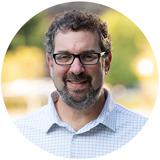
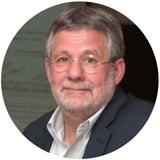
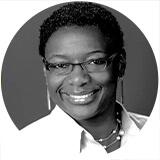
2026 Institute and Fellowship Faculty
| 
| Image

|

| 
| Image

|

| Image

| 
|

| 
| Image

|

| 
| Image

|

|
2026 Fellows
- Dr. Azadeh Aalai, Queensborough Community College, CUNY & NYU
- Dr. Jerlinda Anderson, Benedict College
- Dr. Ashley Baggett, North Dakota State University
- Dr. Genie Bettencourt, University of Memphis
- Dr. Josh Coleman, Arizona State University
- Dr. Alicia Cotabish, University of Central Arkansas
- Dr. Ramin Farahmandpur, Portland State University
- Dr. Alonzo Flowers, University of Texas at San Antonio
- Dr. Lisa Gilbert, Washington University in St. Louis
- Dr. Kenneth Gold, The College of Staten Island, CUNY
- Dr. Seunghoon Han, University of Northern Iowa
- Dr. Rhett Hutchins, University of Arkansas
- Dr. Cher Igelman Edwards, Seattle University
- Dr. Ted Kesler, Queens College, CUNY
- Dr. Ricardo Lozano, Texas A&M International University
- Dr. Natasha Murray-Everett, Rowan University
- Dr. Lesley Noel, University of Colorado
- Dr. Jeong-eun Rhee, Long Island University, Post
- Dr. Jason Ritter, Duquesne University
- Dr. Abigail Stebbins, The Ohio State University
- Dr. Guangyu Tan, State University of New York at Fredonia
- Dr. Terri Watson, The City College of New York, CUNY
- Dr. Deborah Wilson, Texas Southern University
- Ms. Kyrena Wright, Barnard College
- 2025 Fellows
Administrator Track
- Dr. Eliza Blades, Vanderbilt University
- Dr. Vivek Venkatesh, McGill University
- Dr. Anika Simone Johnson, University of Rochester
- Dr. Crystal Bedley, Rutgers University- New Brunswick
- Dr. Sarah York, UW-Madison
- Dr. Chinaka DomNwachukwu, California State University San Bernardino
- Dr. Brad Seligmann, UMass-Amherst
Curriculum & Pedagogy Track
- Dr. Michelle Falter, St. Norbert College
- Dr. RubyDawn Lyman, Utah Tech University
- Dr. Elizabeth Erwin, Montclair State University
- Dr. Emily "EJ" Summers, Texas State University
- Dr. Efrain Brito, California Polytechnic State University
- Dr. Laurie Rabinowitz, Skidmore College
- Dr. Christopher Jones, Liberty University
- Dr. Yong Joon Park, Indiana State University
- Dr. James Olgara, SUNY Geneseo
- Dr. Nora Peterman, University of Missouri
- Dr. Antonio Ellis, American University
- 2024 Fellows
Administrator Track
- Ms. Raquel Arredondo, University of Pennsylvania
- Mr. Jarrod Chin, Harvard University
- Dr. Leonel Diaz, Binghamton University (SUNY)
- Dr. Alison Dougherty, Drexel University
- Dr. Joseph Feinberg, Georgia State University
- Dr. Jennifer Goldstein, California State University-Fullerton
- Dr. Majida Kargbo, Northwestern University
- Mr. Sly Mata, University of Virginia
- Mr. Gary Santos, Mendoza Rutgers University-Newark
- Dr. Allyn Shaw, Michigan State University
Curriculum & Pedagogy Track
- Dr. Elisa Abes, Miami University of Ohio
- Dr. Sean Corrigan, Southern Oregon University
- Dr. Sarah Donovan, Oklahoma State University
- Dr. Keesha Greer-Effs, Berea College
- Dr. Erin Piedmont, Georgia Southern University
- Dr. Elizabeth Soslau, University of Delaware
- Dr. Melissa Stanley, Central Michigan University
- Dr. Rachel Turner, Utah State University
- 2023 Fellows
Administrator Track
- Dr. Cheryl Brown, Stanford University
- Dr. Barbara Curchack, Inver Hills Community College
- Dr. Noah Drezner, Teachers College, Columbia University
- Rajeeyah Finnie-Myers, Bank Street College
- Dr. Stacey Hardin, University of Washington-Seattle
- Stacey Harris, College of William & Mary
- Katie Yezzi, Relay Graduate School of Education
Curriculum & Pedagogy Track
- Dr. Laura Apol, Michigan State University
- Dr. Kristy Brugar, The University of Oklahoma
- Dr. Ariel Cornett, Georgia Southern University
- Dr. Huili Hong, Vanderbilt University
- Dr. Keitha-Gail, Martin-Kerr University of Minnesota-Twin Cities
- Dr. Jana Lo Bello Miller, University of Minnesota-Twin Cities
- Dr. Gabriel Reich, Virginia Commonwealth University
- Dr. Shawn Savage, University of North Carolina-Wilmington
- Dr. Shane-Anthony Smith, New York University
This opportunity taught me more than any professional experience in the last 20 years. Thank you for the incredible and life-changing opportunity to participate in the fellowship. The organization, materials and subject matter experts offered an emotional and thoughtful educational program
-Fellow 2024
The deep learning that I experienced through the Institute has made me much more confident in my understanding of Jewish history, the breadth and longevity of antisemitism, and the diversity of Jewish experiences. During conversations with faculty and administrators on my home campus, I was able to better understand the key cultural elements we were discussing, how antisemitism is affecting our students, and was able to share new resources all because of the Institute! The opportunities to engage with scholars and survivor experiences, not only provided a sophisticated understanding of the topics and made me feel much more capable to combat antisemitism in my role as an academic administrator.
-Fellow, 2025
We highly recommend Fellowship and Summer Institute to teacher educators and administrators in higher education. The Summer Institute provided the opportunity for us to engage in ongoing reflexive practices and commitments in diversity, action-oriented justice work, as we fully acknowledged that we had and have much to learn about Judaism, Jewish history and culture, antisemitism, and Jewish inclusion.
-Fellow 2023

Dr. Keitha-Gail Martin-Kerr

Dr. Jana Lo Bello Miller
Alumni from Inaugural Cohort: 2025 Shine A Light Winners
Dr. Keitha-Gail Martin-Kerr and Dr. Jana Lo Bello Miller were recognized with the Shine A Light on Antisemitism Civic Courage Award for Outstanding University Educator or Administrator in Action Against Antisemitism. Now faculty at the University of Minnesota, they took action following the Fellowship to confront antisemitism in education. Their work includes revising course materials, launching faculty–student dialogues, presenting at AERA, and expanding Jewish children’s literature through an Academic Engagement Network mini-grant. Together, their efforts reflect a sustained commitment to strengthening Jewish inclusion in educational settings.
Special Thank You to Our Partners: